

Imurenge.com
Loading...
Welcome ! Preparing Your experience ..
Welcome ! Preparing Your experience ..
August 11, 2026politicsGATUMBABurundi#breaking-news
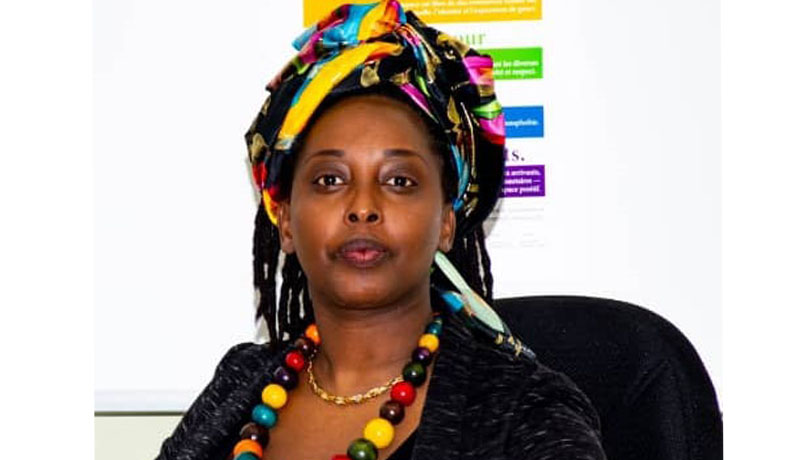
BURUNDI - Pamella Mubeza, a Burundian activist who had been living in Canada, has become the subject of renewed attention after appearing in videos associated with RED-Tabara, the armed Burundian opposition movement operating from eastern Democratic Republic of Congo.
Reports say Mubeza left her life in Canada and travelled to eastern Congo to join the movement. In a video circulating online, a woman identifying herself as a Burundian who had been working in Canada says she gave up her job because she wanted to contribute to what she described as the liberation of Burundians. Recent reporting has identified the woman as Pamella Mubeza.
For someone previously known for her work as a women's rights and human rights activist, the development is significant.
But beyond Mubeza herself, the bigger issue is what her decision says about Burundi.

Burundi has experienced years of political tension, repression and armed opposition. RED-Tabara emerged from the political crisis that followed the disputed 2015 decision by then-President Pierre Nkurunziza to seek a third term.
The group has since carried out attacks inside Burundi, while the government has accused it of terrorism and repeatedly blamed Rwanda for supporting it. Rwanda has denied the accusations.
For those who have followed East African politics closely, Burundi's political situation remains deeply troubling. The country may appear more stable than it was during its civil war, but stability should not be confused with political success.
The continued existence of an armed opposition movement is a reminder that serious political grievances remain unresolved.
Mubeza's reported decision to leave Canada and move toward an armed movement makes that reality even harder to ignore.
Burundi's political and security problems have increasingly become connected to the wider conflict in eastern Congo.
Burundian troops have operated in South Kivu, officially as part of efforts to deal with armed groups threatening Burundi and, more recently, in support of the Congolese government against M23.
But eastern Congo is not simply another battlefield.
It is home to communities that have spent decades caught between armed groups, national armies and regional political interests.
Among them are the Banyamulenge.
The Banyamulenge have repeatedly found themselves at the center of political and ethnic tensions in South Kivu. Their perceived links to Rwanda and Burundi have often been used to portray them as foreigners or proxies, despite their long history in Congo.
That has had deadly consequences.
There are serious allegations concerning abuses against civilians in eastern Congo involving different armed actors, including allegations involving Burundian forces. Such claims deserve independent investigation.
It is important, however, not to turn those allegations into a blanket accusation against every Burundian or claim without evidence that Burundi has an official policy of eliminating the Banyamulenge.
The facts are serious enough without exaggeration.
The Banyamulenge have suffered repeated attacks, displacement and political persecution, and their security remains a major concern in eastern Congo.
That history is impossible to discuss without remembering Gatumba.
On August 13, 2004, more than 160 Congolese refugees were killed at the Gatumba refugee camp in Burundi. Most of the victims were Banyamulenge women and children who had fled violence in South Kivu. Amnesty International documented the massacre and noted that the authorities had failed to fully investigate and prosecute those responsible.
Twenty-two years later, the victims' families are still waiting for justice.
There have been renewed attempts to pursue the perpetrators. In 2024, Human Rights Watch reported that survivors and relatives had filed criminal cases in Burundi, Rwanda and the Democratic Republic of Congo against alleged perpetrators, seeking accountability for the massacre.
That alone tells us something important.
Time has passed, but the wound has not closed.
Gatumba remains one of the clearest examples of what happens when ethnic hatred, political violence and regional conflicts come together. The people who died there were refugees. They were supposed to be safe.
They were not.
Burundi has every right to defend itself against armed groups. It also has legitimate security concerns because RED-Tabara has operated from eastern Congo and carried out attacks inside Burundi.
But Burundi's growing military involvement in eastern Congo means its actions will increasingly be judged beyond its own borders.
Those who follow Great Lakes politics are already asking difficult questions about Burundi's role in South Kivu and the treatment of vulnerable communities, particularly the Banyamulenge.
These questions will not simply disappear.
They matter for Burundi's relationship with Congo. They matter for its relationship with Rwanda. And they matter for Burundi's future partnerships within East Africa.
Regional cooperation cannot be built on military alliances alone.
It also requires trust, accountability and respect for civilian life.
Mubeza's reported decision to leave Canada and appear with RED-Tabara should not be viewed simply as the story of one activist.
It is a sign of a much larger problem.
When people who once pursued change through civil society begin turning toward armed movements, governments should ask why.
At the same time, armed opposition cannot be allowed to become an excuse for more violence against civilians.
Burundi needs political change, but the country does not need another generation of war.
It needs institutions that allow genuine political opposition.
It needs space for civil society.
It needs justice for victims.
And it needs a political system where people do not have to choose between silence and armed resistance.
For the Banyamulenge, there is an even more basic demand: the right to live safely in their own country without being treated as permanent suspects because of their identity.
And for the families of those killed at Gatumba, the demand remains unchanged after 22 years:
Burundi cannot change its past. But it can decide what it does with that past.
If the country wants to build lasting partnerships in the Great Lakes region, it will eventually have to confront the questions that continue to follow it, including the political crisis at home, its military role in eastern Congo, the safety of the Banyamulenge and the unresolved legacy of Gatumba.
Those questions are not going away.


Comments
No comments yet. Be the first!