


Imurenge.com
Loading...
Welcome ! Preparing Your experience ..
Welcome ! Preparing Your experience ..
February 3, 2026international#analysis
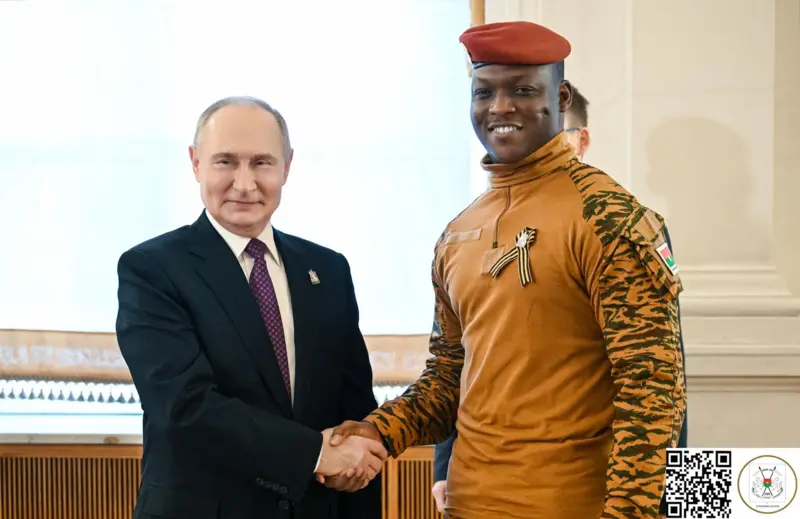
By many accounts, Captain Ibrahim Traoré has become one of the most talked-about leaders in Africa in recent years. Since taking power in Burkina Faso in 2022, the young military leader has built an image of a bold, anti-colonial reformer who challenges Western influence and promises to restore dignity, sovereignty, and economic justice to his country and the African continent.
His rise has not only reshaped Burkina Faso’s political landscape but has also sparked admiration, debate, and controversy across Africa and beyond.
One of the main reasons Captain Traoré is loved by many Africans is symbolism. To his supporters, he represents a new generation of African leaders who refuse to accept what they see as modern-day colonialism.
His speeches often emphasize African independence, self-reliance, and resistance against foreign domination. Many young Africans, frustrated by poverty, unemployment, and perceived Western control over their economies, see him as a voice of their anger and hopes.
Some even compare him to historical African revolutionaries such as Thomas Sankara, the former Burkinabé leader known for his revolutionary policies and anti-imperialist stance. For many, Traoré appears as a continuation of Sankara’s unfinished dream.
After coming to power, Traoré’s government quickly distanced itself from France, Burkina Faso’s former colonial ruler. His administration expelled French troops and reduced diplomatic dependence on Paris, while strengthening ties with Russia and other non-Western partners.
To his supporters, this move is seen as courageous. They believe he is breaking a long-standing system where African countries depend heavily on Western powers for security, economy, and politics.
His message resonates strongly in a continent where many people question why Africa, despite its vast natural resources, remains poor.
Another reason for Traoré’s popularity is his focus on economic sovereignty. His government has introduced policies aimed at ensuring that Burkina Faso benefits more from its natural resources, especially gold.
Some key actions include:
To many Africans, these policies represent justice. They see them as an attempt to end a system where foreign companies extract wealth while local populations remain poor.
Even though these reforms are still developing and face challenges, the idea itself has earned him admiration.
Captain Traoré’s communication style also plays a major role in his popularity. He speaks directly, emotionally, and confidently. His speeches circulate widely on social media, where they are shared by millions of young Africans.
In an era where many African leaders are seen as distant, corrupt, or aligned with foreign interests, Traoré appears different. He is young, military-trained, and projects an image of discipline and determination.
For many supporters, he represents hope and change.
While many praise Traoré, critics argue that his popularity is driven more by rhetoric than results. Burkina Faso still faces serious security threats from armed groups, economic difficulties, and political uncertainty.
Some observers warn that military rule, even when popular, can limit democracy and freedom. Others question whether his alliance with Russia will truly benefit the country or simply replace one foreign influence with another.
However, supporters argue that real change takes time and that Traoré is at least trying to challenge an unfair system.
Captain Ibrahim Traoré’s popularity is not limited to Burkina Faso. Across Africa and in parts of the diaspora, he is seen as a symbol of resistance against global inequality.
In a world where many people feel marginalized by global powers, his message finds an audience far beyond his country’s borders.
Captain Ibrahim Traoré is loved not only because of what he has done but because of what he represents. To many Africans, he embodies courage, independence, and the dream of a continent that controls its own destiny.
Whether his revolution will succeed in the long term remains uncertain. But one thing is clear: his rise has ignited a powerful conversation about Africa’s future, sovereignty, and identity.

