


Loading...
February 7, 2026international#analysis
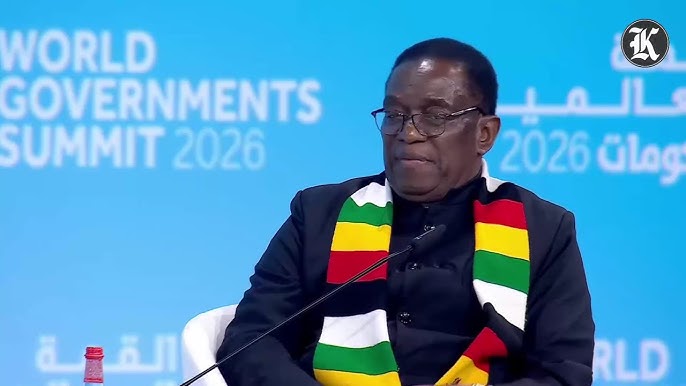
At the World Governments Summit in Dubai on February 4, 2026, Zimbabwean President Emmerson Mnangagwa stood on a global stage and answered questions from American journalist Tucker Carlson about China, Western influence, land reform, sanctions, and Zimbabwe’s path forward. What could have been a routine interview turned into an unvarnished moment about how narratives around Africa are shaped by Western media and how easily they fall into simplified or loaded framing.
Carlson’s opening question invited comparison between historical Western exploitation and modern Chinese investment across Africa. His phrasing suggested that relations with China might simply be a new form of extraction, not fundamentally different from colonial patterns. Mnangagwa did not take the bait. Instead he reframed the conversation around sovereignty and national decision making. He declined to accept the premise that Africa’s options are limited to one form of external domination or another. As he put it, Zimbabwe makes choices based on what delivers results for its people, not on pleasing foreign powers.
This reply was not just political rhetoric. It was a direct invitation to think differently about Africa’s agency. Too often Western media frame African leaders as reactive, defensive, or evasive when they push back against simplistic narratives about the continent. What looks like evasion can be a deeper assertion of perspective rooted in historical experience that Western audiences seldom see. Mnangagwa’s insistence that Zimbabwe “pleases itself” because it is a sovereign nation may strike some critics as evasive, but it reveals a demand to be understood on Zimbabwean terms.
Carlson went on to challenge Zimbabwe’s land reform policies, a deeply sensitive and historically charged subject. His suggestion that the land seizures were racially motivated played into familiar Western tropes about Africa’s internal politics. Mnangagwa’s response was firm: land did not belong to a race, it belonged to Zimbabweans, and reclaiming it was an act of historical justice. That might not satisfy every Western critic, but it was a clear articulation of why Zimbabweans see the issue differently than many international commentators do.
There is a broader lesson in this moment for Western media. The instinct to puncture leaders’ defenses with sharp questions can look like rigorous journalism to domestic audiences, but it can also become a weaponized form of interrogation that neglects context and history. Africa’s leaders are not characters in a morality play about good or bad governance, they are navigating complex legacies of colonialism, Cold War geopolitics, economic isolation, and unequal investment patterns. Often, Western outlets reduce those complexities to headlines that resonate with home audiences but distort deeper realities.
If Western media want to engage African leaders constructively, they should start by shedding assumptions that frame their subjects as either victims or caricatures. A fair and respectful approach would blend curiosity with context, and skepticism with humility. Mnangagwa may be a controversial figure to many observers, but his insistence on framing Zimbabwe’s choices in terms of sovereignty and self-satisfaction exposes how deeply Western narratives still shape global conversations about Africa.
When an interviewer assumes that external powers always act with clear moral superiority, or that African nations should aspire to Western models of development, they miss opportunities to illuminate how people on the ground think about their own futures. If Western media want to be taken seriously on international stages, they should treat African leaders and their perspectives with the same respect and seriousness they afford to counterparts from Europe or North America.
The exchange in Dubai was less about who scored points and more about who controls the narrative. President Mnangagwa’s responses may not have satisfied everyone, but they underscored an essential truth: Africa’s leaders want their countries understood as sovereign, independent actors, not as puzzles for Western audiences to decode. That is a conversation worth having, and Western media would do well to listen, not just interrogate.
