


Loading...
February 26, 2026international#breaking-news#update
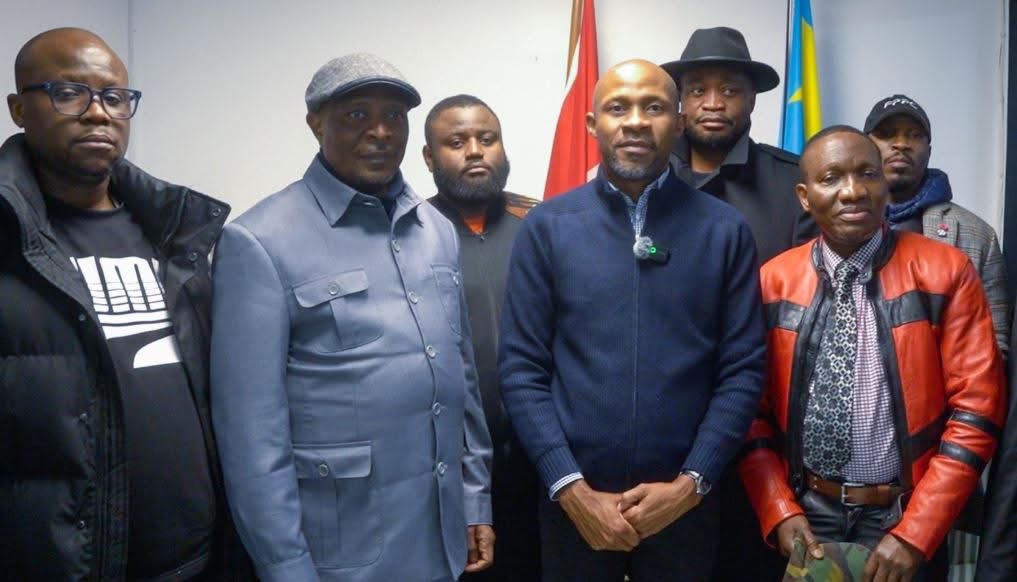
Congolese and Burundian community members gathered in Ottawa, Ontario (Canada), braving freezing temperatures and heavy snowfall, to protest the visit of Patrick Muyaya, Minister of Communication and Media of the Democratic Republic of the Congo. The demonstration took place near Saint Paul University, where the minister was participating in a public engagement with members of the diaspora and academic community.
Holding placards and chanting messages calling for justice, protesters said their demonstration was aimed at drawing international attention to ongoing violence in eastern Congo. Several speakers expressed anguish over attacks affecting Tutsi civilians and other vulnerable communities in North and South Kivu, arguing that civilians continue to bear the brunt of armed confrontations involving government forces, allied troops, and non state armed groups.
Demonstrators sharply criticized the leadership of President Félix Tshisekedi and Burundian President Évariste Ndayishimiye, accusing both governments of failing to guarantee security for at risk populations. Some speakers described the violence as systematic and warned that repeated cycles of attack and displacement have deepened ethnic tensions in the region.
The protest comes at a time when eastern Congo remains volatile despite several announced ceasefire arrangements between Kinshasa and armed factions, including M23 fighters. Although diplomatic efforts, sometimes facilitated by regional actors, have sought to de escalate fighting, reports from conflict affected zones indicate that clashes, drone strikes, and armed confrontations have continued. Community leaders in Ottawa argued that ceasefire agreements have repeatedly been violated or have failed to translate into meaningful protection for civilians on the ground.
According to humanitarian agencies, insecurity in eastern Congo has displaced hundreds of thousands of people in recent years, with villages periodically emptied as residents flee advancing armed groups. Protesters in Ottawa emphasized that beyond military confrontations, the humanitarian cost remains severe, affecting access to food, education, and medical care.
While government representatives at the Ottawa event described the visit as an opportunity to present Kinshasa’s perspective on the conflict and ongoing peace initiatives, demonstrators insisted that symbolic engagements abroad must be matched by concrete action at home. They called on Canada, regional bodies, and the wider international community to intensify monitoring of ceasefire commitments, support independent investigations into alleged abuses, and increase diplomatic pressure aimed at protecting civilians.
As snow continued to fall outside the university venue, participants said their message was clear. Until violence in eastern Congo is genuinely halted and civilian protection becomes a priority rather than a promise, diaspora communities will continue to raise their voices far from home, urging accountability and lasting peace.
