


Imurenge.com
Loading...
Welcome ! Preparing Your experience ..
Welcome ! Preparing Your experience ..
October 28, 2025education#analysis
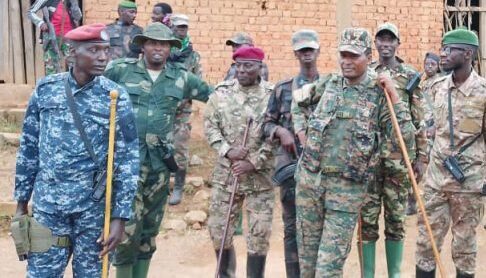
Before the wars, the Banyamulenge people lived peacefully. In the highlands of Itombwe, life was hard but full of meaning. The only problems they faced came from nature. Lions sometimes attacked their cattle, leopards came at night, and snakes hid in the grass. But they managed. They knew how to live with the land and how to protect their families. There was no hatred, no war, only the daily struggle of life.
Everything began to change with the Mahina war in 1924. That was the first time the Banyamulenge experienced violence from others. King Bigimba 1924 was exiled to Lulenge, and peace started to disappear from the highlands.
Later, the Mulele war in 1964 brought more suffering. Many of the Banyamulenge were attacked, their cattle taken, and their homes destroyed. From then on, our people were not only fighting the dangers of nature but also human hatred and injustice.
That is when Twirwaneho began to take meaning among us. It became the spirit of unity, faith, and survival. It reminded us to stand together, to keep hope, and to protect who we are.
Throughout history, the Banyamulenge have faced relentless threats. In 1924, during the Mahina conflict, Belgian authorities supported attacks against them. King Bigimba, a revered leader, and part of his people were forcibly exiled to Lulenge. Villages were burned, governance structures destroyed, and disease and malaria spread among the displaced. Despite these hardships, the Banyamulenge rebuilt their communities and preserved their cultural identity. They proved that determination and courage could endure even the harshest trials.
As they moved into the highlands of Itombwe, the Banyamulenge encountered local pygmy communities. Conflicts arose over grazing lands because their cattle disrupted the delicate ecological balance upon which the pygmies depended. These confrontations were not acts of conquest but of survival. The Banyamulenge learned to navigate unfamiliar terrain, defend their herds, and use clever strategies to face threats from both humans and nature. Their resilience and resourcefulness were forged in these early struggles.
In the 1950s, European settlers, including Belgian farmer Mr. Rigar, tried to seize land in Minembwe and Tulambo. Outnumbered and facing superior weapons, the Banyamulenge resisted fiercely. They relied on strategy, courage, and deep knowledge of the land. Every small victory strengthened their sense of identity and determination to defend their ancestral lands.
After Congolese independence, the Mulele Rebellion in 1964 brought new threats. Insurgent forces targeted their cattle and homes, leaving the community vulnerable and testing their ability to rebuild. In 1996, during the AFDL campaign, villages in Mwoba, Ngadja, Minembwe, Uvira, Baraka, and Bibokoboko were abandoned, livestock was stolen or destroyed, and families were scattered. Survival became a daily struggle amid chaos and violence.
The RCD conflict in 1998 brought further tragedy. Over 2,000 Tutsi, including many Banyamulenge, were killed across nine provinces of the DRC. Families were torn apart, homes destroyed, and entire communities left in despair.
Within the RCD movement itself, divisions began to grow. In 2004, both Colonel Jules Mutebutsi and Colonel Prosper Nabyolwa, who came from different tribes, entered into conflict in
Bukavu. Their fighting caused widespread chaos and violence. Their soldiers clashed in several areas, and the population suffered the consequences. Many civilians were displaced, scattered across South Kivu, and lost everything they had built.
During the same year, the tragic events in Gatumba, Burundi, saw Banyamulenge refugees deliberately targeted in their camp. Women, children, and elders were among the victims, and families were once again separated and left in mourning.
From 2017 to 2025, attacks against the Banyamulenge continued relentlessly. Hundreds of villages were destroyed, and an estimated hundreds of thousands of cattle were lost. Schools, churches, health centers, and cemeteries were damaged or razed. A large portion of the Banyamulenge population, roughly 80–90 percent, fled to neighboring countries such as Rwanda, Burundi, Kenya, Uganda, and Tanzania. The remaining population was internally displaced, concentrated in towns including Minembwe, Mikenke, Bijombo, and Bibogobogo. Rutambwe refers to a local Banyamulenge leader who resides in Bibokoboko. Numbers fluctuated as the situation changed. In recent years, there have been reports that the Burundian army sent forces into some areas, attacking Banyamulenge communities and strongholds, though precise figures remain unclear.
Yet the people, guided by Twirwaneho, resisted fiercely. They held their positions, defended their homes, and refused to surrender, demonstrating that their faith, courage, and will to survive remain unbroken even in the face of organized military assaults.
The true heroism of the Banyamulenge is in how they faced these threats without formal military training or modern weaponry. They fought lions and wild animals to protect their villages. They defended homes against armies, militias, and colonial powers. Every challenge strengthened their courage, every battle proved their resilience, and every act of survival reinforced the spirit of their people.
Through centuries of war, displacement, and relentless attacks, Twirwaneho has stood as the guiding principle of the Banyamulenge. From facing lions and wild animals in the highlands of Itombwe to resisting colonial powers, settlers, militias, and foreign armies, they have shown unmatched courage and resilience. Even during the most tragic events, including the Mahina conflict (1924), the Mulele Rebellion, the AFDL and RCD campaigns, the Col Mutebutsi and col Nabyolwa caused massacres, and the ongoing attacks from 2017 to today, the Banyamulenge have defended their people, livestock, land, and identity with unwavering determination.
Twirwaneho is more than faith; it is a legacy of strategy, unity, and the will to survive. It has empowered the Banyamulenge to withstand superior forces, rebuild their communities after devastation, and protect what is theirs without formal training or modern weapons. Each battle, each act of resistance, has strengthened their resolve and proven that true power lies in courage, resilience, and devotion to community.
As General Makanika said, Tuzarwana kugeza ku mutonyi wa nyuma w’amaraso. Iyi ntambara tuzayitsinda kandi tuzayitsindana ukuri. We will fight until the last drop of our blood. Time and again, Twirwaneho has allowed the Banyamulenge to survive, rise, and triumph. Their story is one of heroic endurance, a testament to a people who refuse to surrender and who will continue to defend their homes, heritage, and future for generations to come.


