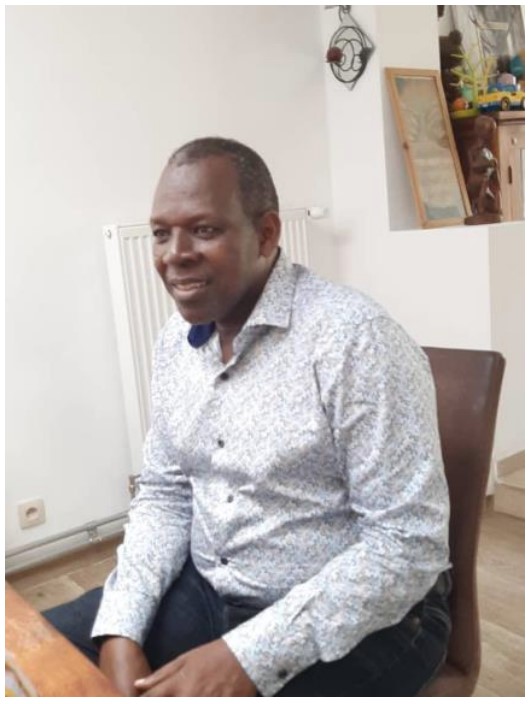
Biography of Ir. Nahum BUTOTO BIGIRI
Ir. Nahum BUTOTO BIGIRI is a distinguished development expert with a long-standing commitment to rural development and humanitarian work, particularly in the Mulenge region and throughout South Kivu province in the Democratic Republic of Congo. His professional journey has taken him across many countries, from local initiatives in his home region to impactful work in South Sudan, where his dedication to positive change continues to resonate.
Early Life and Education
Born on February 27, 1963, in Rukombe, a small village nestled in the hills of South Kivu, Ir. Nahum was raised in an environment where resilience and self-reliance were essential to survival. His early experiences with rural life shaped his deep understanding of the challenges faced by local communities, especially in remote, conflict-affected regions.
- Primary Education: He began his education at Lunundu in Minembwe, where he attended school from 1972 to 1978. Early on, it was clear that Nahum had a passion for learning, despite the limited resources available to him.
- Secondary Education: He furthered his studies at Institut Mwanga in Buvira, where he earned a diploma in Math-Physics between 1978 and 1983. During this time, he developed a strong analytical mindset that would serve him well in his future work in development and humanitarian projects.
- Higher Education: Nahum’s academic journey took him to the Institut Supérieur d’Études Agronomiques (ISEA/Bengamisa), where he pursued a degree in Agronomy, graduating in 1989. His thirst for knowledge led him to further his studies in Development Studies, earning a Master’s degree in 2005 from the renowned Institut d’Études au Développement (IUED) in Geneva, Switzerland. It was during this time that he honed his ability to navigate complex socio-economic issues in post-conflict settings.
International Training and Development
Ir. Nahum’s commitment to professional growth led him to participate in various international courses and training programs, where he deepened his expertise in rural development, project management, and humanitarian response. His diverse training has equipped him with the tools to address a range of issues from food security to post-conflict recovery.
Some of the key international courses he attended include:
- 1996: International course on “Extension Services for Rural Development” in Feldaling, Germany.
- 1998: Specialized training on “Project and Program Development” in Benin, which expanded his ability to design and manage large-scale development initiatives.
- 2000: Participated in an advanced course on “Mushroom Cultivation Science and Technology” in China, where he learned innovative methods to improve agricultural productivity.
- 2001: Completed training in Nairobi on “Humanitarian Principles/Project Sphere,” focusing on effective crisis management.
- 2002–2009: Over the years, he participated in several seminars and workshops organized by Oxfam and other international organizations, where he gained expertise in project monitoring, advocacy, and financial management for NGOs.
Career and Professional Impact
Ir. Nahum’s professional journey is a testament to his dedication to improving lives, especially in the most underserved regions. Starting as a local leader in his community, he quickly expanded his scope, taking on roles that allowed him to shape policies and lead development programs on a regional and international scale.
- 1998–present: As Director General of UGEAFI, Ir. Nahum has led the organization’s efforts to enhance rural development in conflict zones, focusing on food security, sustainable agriculture, and community empowerment.
- 1989–1992: He began his career leading Agricultural Programs at Action Kusaidiaa, a foundation dedicated to community-based development initiatives. His work in these early years helped establish the foundation for his lifelong commitment to rural development.
- 1992–1994: As the leader of the Cassava Wood Park Program in Fizi, supported by Oxfam Great Britain, Nahum helped introduce sustainable agricultural practices that increased food security for vulnerable communities in the region.
- 1994–1996: He became the Coordinator of UGEAFI, where he played a key role in scaling up programs that addressed the root causes of food insecurity and poverty in South Kivu.
- 1996–1998: As head of Food Security Programs at Oxfam Quebec, Ir. Nahum worked on large-scale projects aimed at improving agricultural productivity and resilience in the Great Lakes region of Africa.
- 2002: His expertise in project management led him to teach at the Université Libre de Kigali (U.L.K.) in Rwanda, where he shared his knowledge of Project and Program Planning with future leaders in development.
- 2007: Ir. Nahum evaluated the Food Security Program for CRONG Oxfam in Maniema, where his insights led to improvements in program delivery and effectiveness.
Publications and Thought Leadership
Throughout his career, Ir. Nahum has shared his expertise through publications and research. His written works reflect his deep understanding of the challenges faced by communities in conflict zones and his commitment to finding sustainable solutions.
- 1989: Extraction of Starch Flour from Cassava Tubers Using a Manual Grater (TFC, ISEA/BENGAMISA, RD Congo) – a work that highlighted practical, low-tech solutions for rural communities.
- 2005: Development in the Context of Armed Conflict: The Case of UGEAFI NGO (Master’s Thesis, IUED/GENEVA) – a comprehensive study on the role of NGOs in post-conflict reconstruction, especially in fragile regions like South Kivu.
International Experience
Ir. Nahum’s work has taken him across the globe, from the heart of Africa to Europe and beyond. He has worked in Uganda, Rwanda, Burundi, Kenya, Tanzania, Ethiopia, Cameroon, Guinea, Sierra Leone, France, Belgium, Netherlands, Denmark, Austria, Germany, China, Israel, and the United States, sharing his knowledge, learning from others, and fostering cross-cultural collaboration.
Personal Reflections
Ir. Nahum's personal story is one of resilience, dedication, and service to others. Growing up in a rural community where basic resources were scarce, he developed a strong sense of empathy and a desire to uplift those who are often overlooked by society. Throughout his career, he has remained deeply connected to the communities he serves, constantly striving to bring about sustainable change that will benefit future generations.
His work is not just about projects or policies, it’s about improving lives, giving voice to the marginalized, and creating lasting hope in places that have long been forgotten by the world. Ir. Nahum believes that true development can only be achieved when communities are empowered to lead their own transformation.