


Imurenge.com
Loading...
Welcome ! Preparing Your experience ..
Welcome ! Preparing Your experience ..
February 23, 2026international#breaking-news
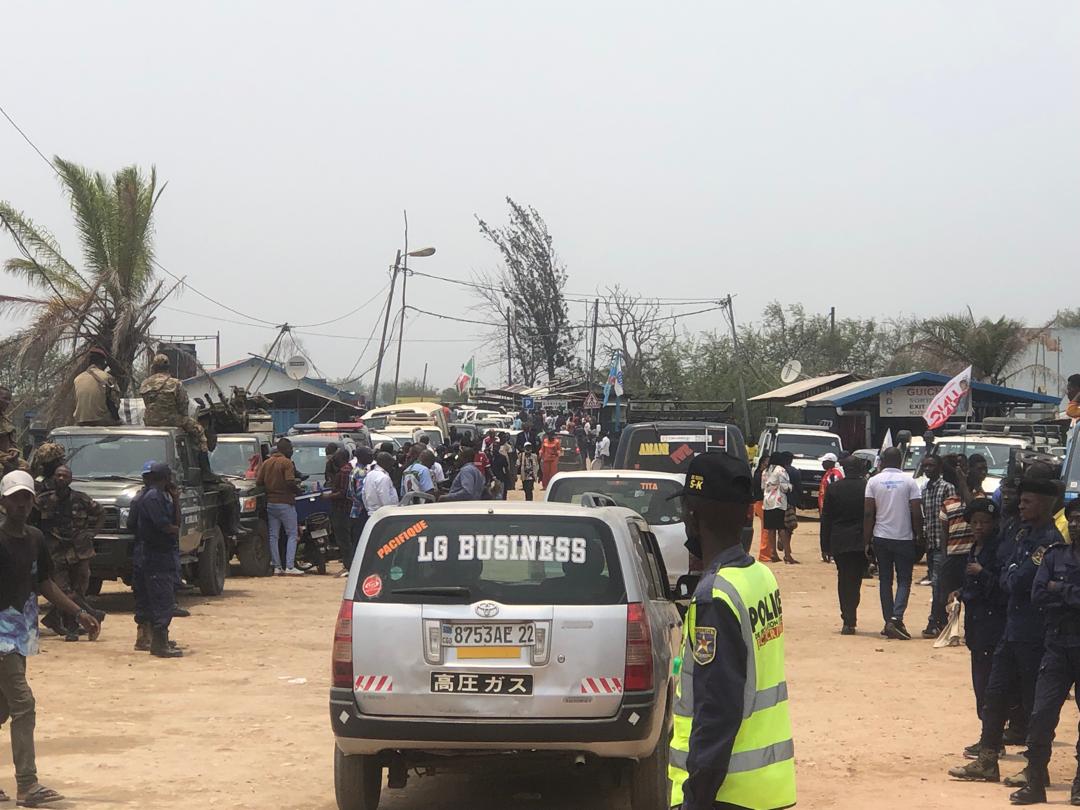
The Government of Burundi officially reopened the Gatumba border crossing with the Democratic Republic of the Congo on Monday, February 23, 2026, ending nearly three months of closure that had disrupted trade, travel, and livelihoods across the region.
The Gatumba post, which links Burundi to the Congolese city of Uvira, had been shut down on December 10, 2025, shortly after M23 fighters regained control of Uvira. The renewed fighting at the time triggered large scale displacement and heightened security concerns along the border.

By early Monday morning, crowds had gathered at Gatumba. Traders, transporters, and families stood near the crossing, waiting to confirm what many had only heard through word of mouth, that the border was open again.
“It is true, the border is open,” some residents said, visibly relieved and even surprised that movement had resumed.
Burundi’s Commissioner General of Immigration, Maurice Mbonimpa, confirmed the reopening and clarified that there would be no special ceremony marking the decision. According to him, the reopening is fully operational and standard immigration procedures apply, including visa requirements and travel documentation.
He also stated that the border will operate daily from 8:00 a.m. to 5:00 p.m.
Among the first to cross were Congolese traders, patients seeking medical care, and truck drivers who had been stranded in Bujumbura since December.
One Congolese driver, who said he had remained in Burundi since the closure, expressed visible emotion. “We are very happy to return home. The border is finally open. We have been stuck here since December 2025,” he said.
In Uvira, small scale traders welcomed the decision as a turning point. For many, the closure had abruptly cut off their primary source of income. Informal commerce between Gatumba and Uvira is the backbone of thousands of households, especially those dealing in fruit, vegetables, bottled water, and other daily goods.
“Before, we transported produce and basic goods across the border,” one trader in Uvira explained. “When Gatumba closed, our business stopped. We had no work. Now we can start again.”
Humanitarian organizations operating in Uvira have called on Burundian authorities, in coordination with the UN Refugee Agency, to allow Congolese refugees who wish to return home to do so voluntarily and safely.
Many Congolese refugees are currently hosted in camps in eastern Burundi, particularly in Ruyigi Province. In recent weeks, some refugees staged protests, arguing that living conditions in the camps had become increasingly difficult and demanding the right to return voluntarily to Congo.
During the border closure, irregular crossings reportedly increased. Several Congolese nationals are said to have crossed back through unofficial routes along the Rusizi River. Local sources allege that some individuals paid up to 100,000 Burundian francs to security personnel to facilitate passage, while others used boats operating between Rumonge and Baraka to bypass formal checkpoints.
The reopening is not only significant for Congolese citizens. Many Burundians also depended on daily work opportunities in Uvira. Motorcycle taxi drivers, construction workers, welders, and other skilled laborers who had been employed across the border were forced to remain in Burundi during the closure.
For them, the reopening represents more than restored mobility. It signals the return of income and stability after months of uncertainty.
The Gatumba crossing has long been one of the most active commercial corridors between Burundi and eastern Congo. Its closure exposed just how interconnected the two economies are, particularly at the grassroots level.

While security concerns in eastern Congo remain unresolved, Monday’s reopening offers a measure of relief to communities that rely on open borders for survival. For now, the movement of people and goods has resumed, and with it, cautious optimism that stability may slowly return to this fragile frontier.

