


Loading...
May 18, 2026nationalinternationalpolitics#breaking-news#analysis
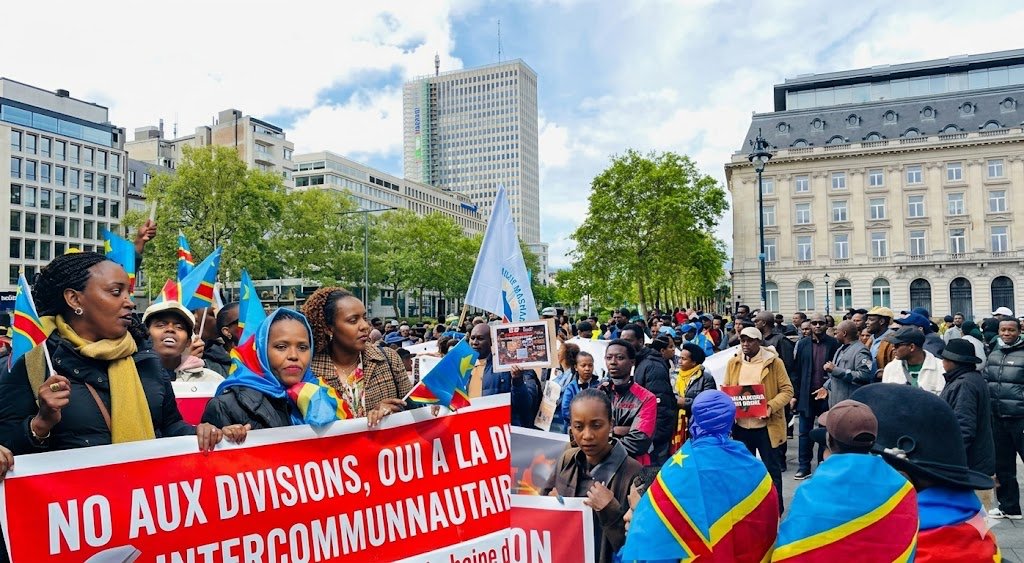
On 15 May 2026, the streets of Belgium became the stage for what many participants described as a historic and emotional moment for the Congolese diaspora. Under the theme, “Together for Justice, Together for Banyamulenge,” hundreds of demonstrators gathered to raise awareness about the worsening humanitarian situation facing Banyamulenge civilians in eastern Democratic Republic of Congo.
What made this demonstration different from many others organized in recent years was the diversity of the people who took part. According to sources present at the event, this was the first time large numbers of Congolese from different ethnic communities publicly stood side by side with Banyamulenge demonstrators in a shared call against violence, hate speech, displacement, and continued attacks against civilians in Minembwe and surrounding areas.
For many who attended, the gathering represented more than a political protest. It was seen as a message of solidarity and humanity, showing that the suffering of innocent people should concern every Congolese citizen, regardless of tribe or region.
Participants carried banners calling for justice, protection of civilians, humanitarian access, and an end to what many described as the silence surrounding the crisis affecting Banyamulenge communities. Others sang songs of peace and held moments of reflection for families displaced by conflict and insecurity.
Several demonstrators also expressed frustration over what they see as limited international attention toward the situation in Minembwe. Questions continue to grow among members of the diaspora and observers following events in eastern Congo.
Why does the world remain largely silent while civilians continue to face insecurity, food shortages, restricted humanitarian access, and repeated violence?
Why are innocent families still living in fear despite repeated calls for peace and protection?
These concerns intensified in recent days after reports emerged that humanitarian aid efforts faced renewed difficulties. Members of the diaspora pointed to the recent arrival of four Red Cross vehicles into affected areas as a sign of hope that assistance could finally reach struggling civilians.
However, optimism quickly faded after new reports circulated claiming that tensions resumed shortly afterward, including renewed drone strikes in parts of the region. The developments left many people questioning whether meaningful peace efforts are truly progressing on the ground or whether civilians remain trapped in an endless cycle of violence and uncertainty.
For those who participated in the Belgium demonstration, one message remained clear throughout the day, justice and peace should never be selective. The protection of innocent lives must go beyond politics, ethnicity, or regional divisions.
As the demonstration came to an end, participants vowed to continue raising awareness internationally and to keep pushing for accountability, humanitarian support, and lasting peace for all communities affected by conflict in eastern Congo.
