


Banyamulenge Community Unveils First Memorial Stone for Gatumba Massacre Victims in the UK
August 21, 2024
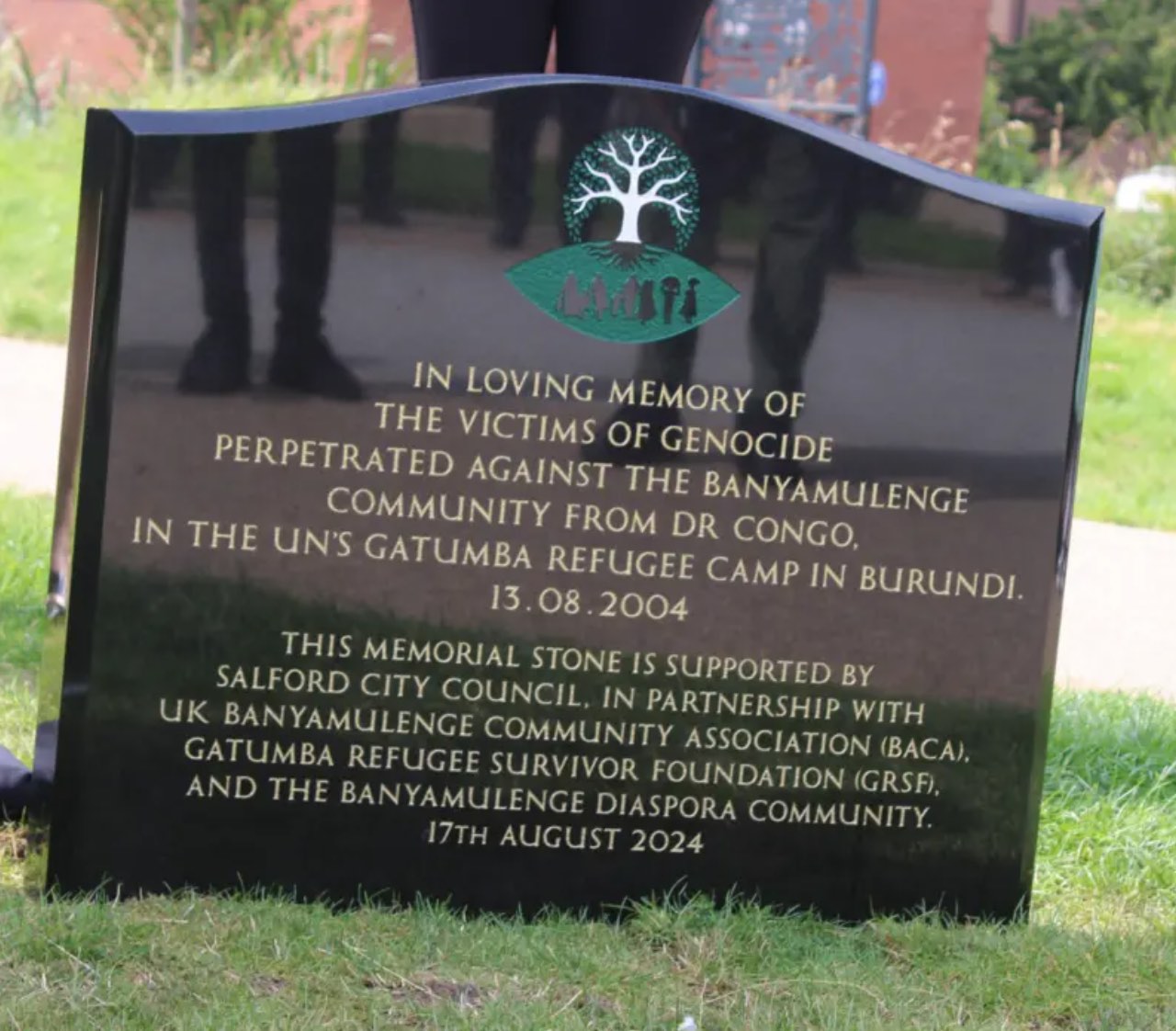
Salford, UK – For the first time, the Banyamulenge community, a minority ethnic group originally from the eastern Democratic Republic of Congo, has established a memorial stone in the United Kingdom to honor their loved ones who perished in the 2004 Gatumba massacre. This significant event took place in Salford, northern England, marking 20 years since the tragedy.
A Tragic Chapter Remembered
On August 13, 2004, one of the most tragic incidents in the history of the Banyamulenge people occurred in Gatumba, a refugee camp in Burundi. In a brutal attack, approximately 166 Banyamulenge refugees were killed, many of whom were women and children. This atrocity left deep scars on the community, and the memory of those who perished has continued to resonate across generations.
In an effort to ensure that the memory of the victims endures and to provide a place of solace for survivors and their descendants, the Banyamulenge diaspora residing in the UK, Europe, and the United States came together to erect this memorial stone. This is the first such memorial in the world, symbolizing a global recognition of the tragedy and the ongoing quest for justice and healing.
A Place for Healing and Reflection
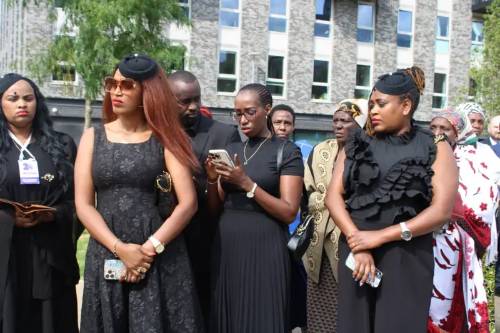
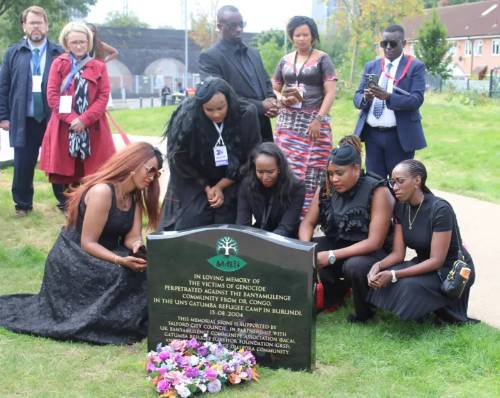
The unveiling ceremony took place at GoChurch Manchester on Saturday, drawing Banyamulenge from various parts of the world, as well as local officials and supporters. The event was marked by emotional tributes, prayers, and the laying of wreaths at the memorial, which is inscribed with the names of those who lost their lives in Gatumba.
Teresa Pepper, representing the mayor of Salford, addressed the gathering, emphasizing the importance of remembrance not just as a way to honor the past, but as a means to learn and grow from it. “What happened in Gatumba should serve as a lesson for both the past and the present,” she said. “Remembrance is a fight for justice and a way to encourage survivors to heal from their wounds and continue progressing in unity.”
The ceremony was a poignant reminder of the resilience of the Banyamulenge community, who, despite the horrors of the past, continue to seek peace and solidarity. Survivors of the massacre, some of whom traveled from distant countries, were visibly moved, shedding tears as they remembered the loved ones they lost.
A Memorial of Global Significance
The establishment of this memorial stone in Salford is a milestone not just for the Banyamulenge community but for all those who stand against ethnic violence and impunity. The memorial serves as a powerful statement against forgetting the injustices of the past and underscores the need for ongoing efforts to support survivors and promote reconciliation.
In attendance were several notable figures, including MPs Michael Wheeler and Rebecca Long Bailey, who represent the Salford area. They were among the dignitaries who paid their respects and acknowledged the importance of the event. The memorial stone itself is a simple yet profound tribute, bearing the names of the victims and standing as a permanent reminder of the lives that were unjustly taken.
Looking Forward with Hope
As the Banyamulenge community continues to navigate the complexities of their identity and history in the diaspora, this memorial stone provides a focal point for collective mourning and remembrance. It also serves as a beacon of hope for future generations, ensuring that the stories of those who perished in Gatumba are never forgotten.
Espérance Nyasezerano, head of the Gatumba Refugee Survivors Foundation (GRSF), lit a candle of hope during the ceremony, symbolizing the enduring spirit of the Banyamulenge people. “This memorial is not just a tribute to those we lost,” she said, “but a call to the world to remember, to seek justice, and to ensure that such atrocities never happen again.”
The unveiling of this memorial stone is a significant step in the Banyamulenge community’s journey towards healing and reconciliation. It stands as a testament to their strength, their resolve to remember their past, and their hope for a future where peace and justice prevail.
Conclusion
The Gatumba memorial stone in Salford is more than just a monument; it is a living reminder of the enduring impact of the 2004 massacre on the Banyamulenge community. It represents a commitment to remembering those who were lost, seeking justice for the survivors, and fostering a sense of unity and hope for the future. As the first of its kind in the world, this memorial marks a significant moment in the global recognition of the Gatumba massacre and the ongoing struggle against ethnic violence.
Source: BBC Gahuza
Author
