


Imurenge.com
Loading...
Welcome ! Preparing Your experience ..
Welcome ! Preparing Your experience ..
November 20, 2025politics#analysis
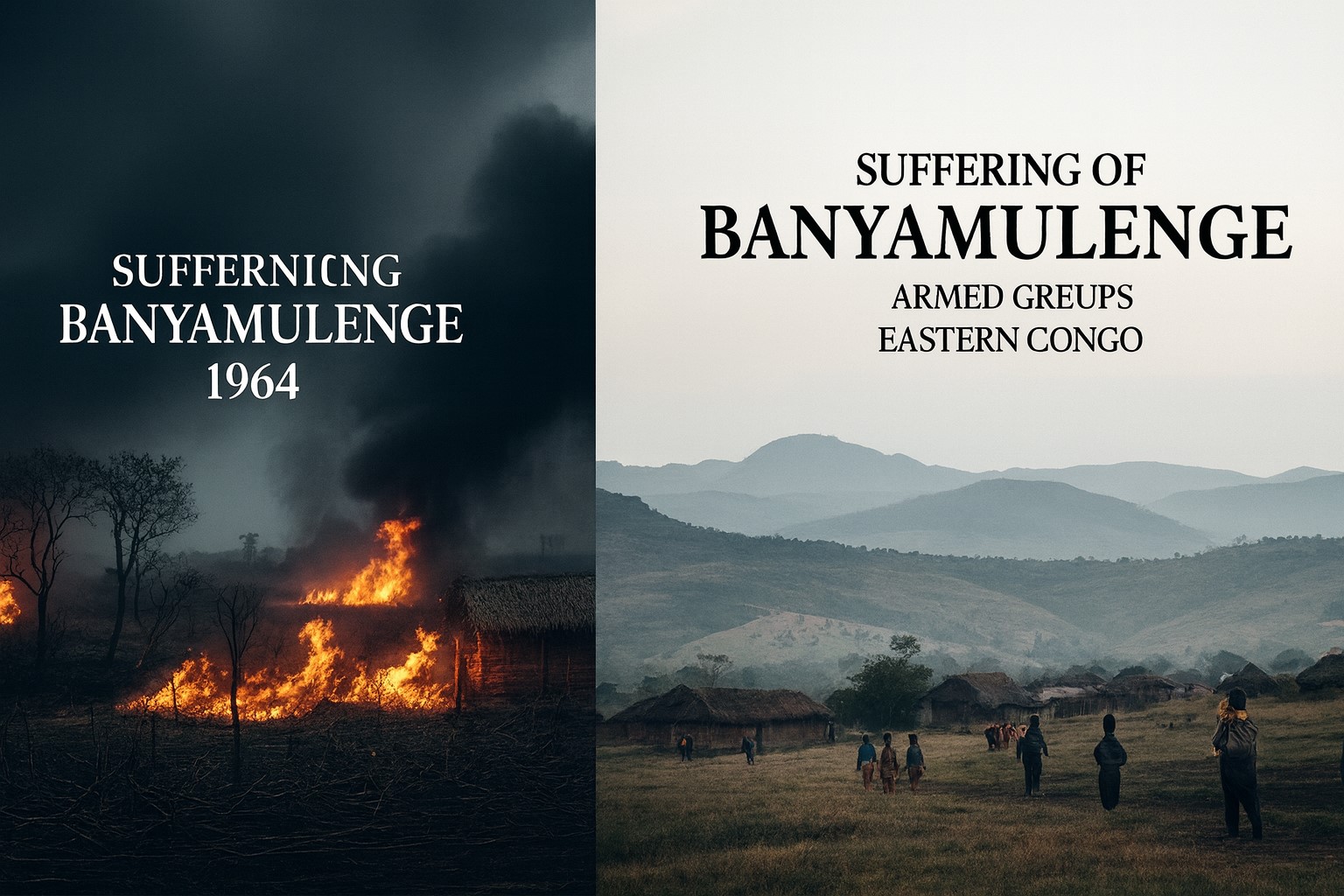
For more than half a century, the Banyamulenge community in eastern Congo has endured a cycle of fear, displacement, and targeted violence. What often appears as scattered conflict is, in truth, a long and painful record of a people striving to survive in one of the most volatile regions of the African Great Lakes.
A Historical Wound That Never Healed
The suffering of the Banyamulenge traces back to 1964, a period marked by political tension and debates over identity and belonging. From that point forward, their Tutsi identity and presence in the South Kivu highlands placed them at the center of suspicion and hostility. These early pressures planted the seeds of discrimination and insecurity that continue to shape their lives today.
A New Wave of Organized Attacks
The crisis deepened dramatically in 2017 when several armed groups, especially Mai Mai and Wazalendo factions, launched a coordinated effort to expel the Banyamulenge from their ancestral territories. These were not isolated incidents. The attacks were strategic, continuous and spread across Minembwe, Bijombo, Rurambo, Bibogobogo, Mibunda, Kamombo, and other surrounding zones.
Villages were destroyed, property looted, and families forced into the mountains for survival. Local authorities and the national army, FARDC, struggled to prevent the abuses. In some cases, FARDC soldiers faced accusations of aiding armed groups or taking part in attacks themselves, further undermining any sense of safety for the Banyamulenge.
Over time, joint operations between FARDC units and certain militias signaled a troubling shift that left Banyamulenge communities even more exposed.
A Region Saturated With Armed Forces
Today the highlands of Fizi and Uvira host a dense concentration of armed actors. Residents report the presence of Congolese forces, Burundian soldiers, Wazalendo fighters and combatants from the FDLR. This alignment creates an unpredictable and dangerous environment for civilians trapped between competing military interests.
Local sources estimate that nearly fourteen thousand Burundian troops are stationed around Banyamulenge areas. Added to this are FDLR elements, including individuals linked to the 1994 genocide against the Tutsi in Rwanda, who are accused of coordinating with Congolese forces and allied militias. This combination has generated deep fear among Banyamulenge communities who feel encircled on all sides.
The Daily Reality for Civilians
Understanding the crisis requires recognizing the human cost:
1. Continuous attacks keep entire communities under siege.
2. Drone strikes target locations where displaced civilians seek refuge.
3. Blocked routes cut off access to food, medicine and basic goods.
4. Displaced families face severe conditions with little humanitarian aid.
5. Persistent ethnic discrimination labels the Banyamulenge as enemies of the state.
For countless families, life has become a series of desperate movements between hilltops, always trying to stay a step ahead of violence that shows no sign of stopping.
Why This Story Matters
The Banyamulenge crisis offers crucial lessons about fragile states, identity-based conflict and the dangers of allowing armed groups to shape local power dynamics. It shows how unchecked narratives, ethnic scapegoating and militarization can entrench cycles of violence for generations.
A Call for Responsibility and Truth
As someone committed to peacebuilding, I call on the international community, human rights institutions and regional governments to confront this crisis with clear-eyed urgency. Silence only enables further suffering.
An independent and impartial investigation is essential. It would establish the truth, document patterns of abuse and guide real measures to protect a vulnerable population whose fundamental rights have been ignored for far too long. Protecting the Banyamulenge is not only a moral duty, it is a step toward genuine stability in a region that has endured decades of conflict.
— Edited by U Uwase —

