


Loading...
October 18, 2025technology#analysis
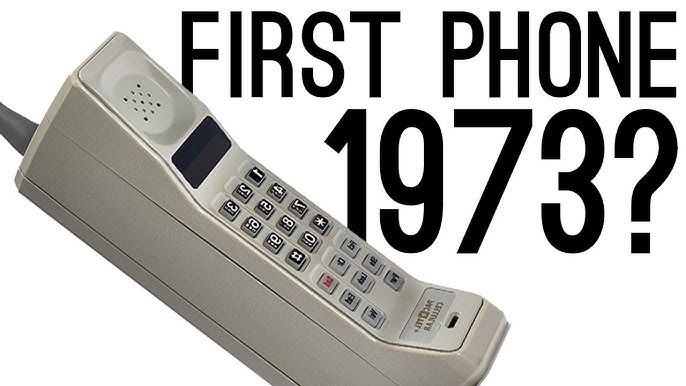
On a cool spring morning in April 1973, the streets of Manhattan bustled with the usual rush of taxis, pedestrians, and city noise. Among the crowd that day, a man stood holding a strange, brick-sized device to his ear. His name was Martin Cooper, an engineer at Motorola. With one press of a button, he made a call that would echo through history.
That moment marked the birth of the mobile phone, the first time a person spoke through a handheld device not connected by any wire.
Until that day, phones were stationary objects. They lived on desks, hung on walls, and tied people to specific places. The idea of carrying your voice anywhere you went belonged to science fiction. Yet Cooper believed that communication should be personal, portable, and free.
Motorola had been competing fiercely with AT&T’s Bell Labs, which was experimenting with car phones that required large transmitters. Cooper’s vision went further. He wanted a device small enough to fit in your hand, one that could connect directly to a network of radio towers spread across the city. It was a bold dream, and his team worked tirelessly to turn it into reality.
After months of design and engineering, they created a prototype called the DynaTAC 8000X. It was heavy by modern standards, weighing about two and a half pounds, and had a talk time of barely thirty minutes. But it worked, and that was enough to change the future.
On April 3, 1973, standing near the New York Hilton, Martin Cooper made the first public mobile phone call. To make the moment even more symbolic, he decided to call his rival, Dr. Joel Engel, head of AT&T’s Bell Labs research. “Joel,” Cooper said with a smile, “I’m calling you from a cell phone, a real handheld portable cell phone.”
People nearby stopped and stared. Some thought it was a joke, others simply could not believe what they were seeing. But it was real, the first conversation carried over a wireless handheld phone.
That call was short, just a few sentences, but its meaning was enormous. It showed that telecommunication no longer needed wires. It proved that human voices could travel freely through the air. It was the beginning of mobile freedom, a shift that would eventually connect billions of people across continents.
The years that followed were filled with challenges. Building a network of towers, improving battery life, and reducing the cost took another decade. But the seed had been planted. By the 1980s, mobile phones became available to the public, though only the wealthy could afford them. By the 1990s, they were smaller, more reliable, and more affordable. By the early 2000s, mobile phones had become a global necessity, transforming how humans communicate and live.
Today, it is hard to imagine life before that first call. We check the time on our phones, take photos, stream music, and talk across oceans without hesitation. Yet all of this began with one man standing on a sidewalk in New York City, proving that people could talk to each other without a single wire in sight.
The year 1973 gave us more than a device. It gave us the beginning of a movement toward constant connection. Martin Cooper’s call was more than a technical milestone. It was a declaration that communication belongs to everyone, everywhere.
From that single call, the world became smaller and humanity became closer.
